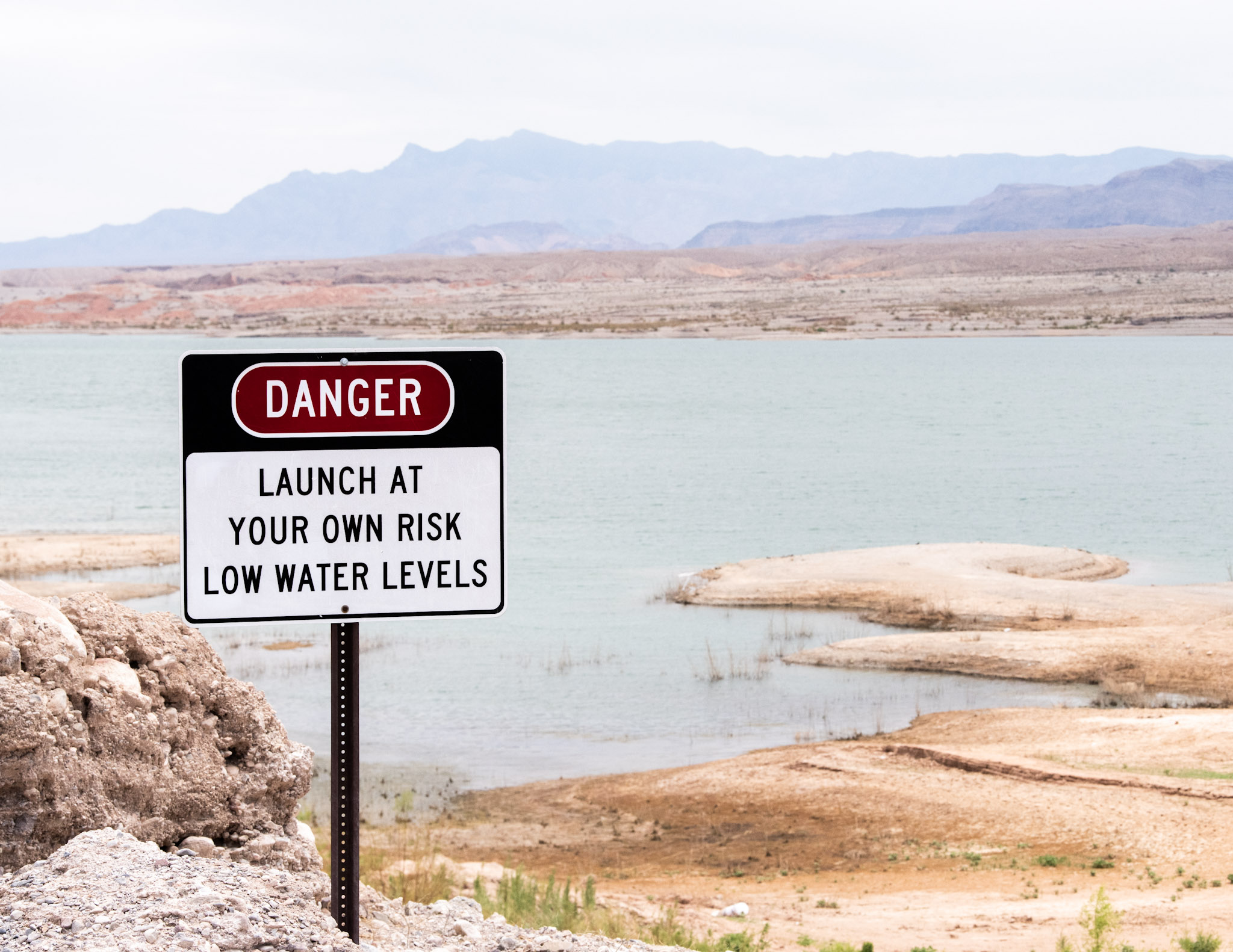
The federal government’s release of a Record of Decision for Post-2026 operations at Lakes Mead and Powell ends a long-standing guessing game about how water officials will manage shrinking reservoirs. Nevertheless, there’s still a lot of uncertainty.
The big takeaway from the document is that the federal government is giving some flexibility to all parties on the issue garnering the most attention: the cuts to the Lower Basin.
The document says that it does not have to wholly stick to the schedule of cuts that was listed in Appendix C of the Final Environmental Impact Statement. However, it said those cuts could still apply.
Specifically, the document says on pages 5-6:
With respect to provisions concerning Lower Basin shortages in the Operating Guidelines, the Department will consult with the Lower Division States and other affected parties as appropriate, regarding specific shortage volumes and the distribution of shortages in the Lower Division States. The assumptions contained in the Final EIS shall not preclude or predetermine any consultation outcomes, and the Department may adopt shortage volumes and distributions that differ from the modeling assumptions applied in the Final EIS (in particular Table 2-3, Table 2-4 and Appendix C) and will consider approaches from prior NEPA analyses (e.g., the 2007 Interim Guidelines Final EIS), consistent with applicable federal law, so long as the Operating Guidelines remain within operational sideboards in the Decision Framework.
That statement is cause for pause. It means that Arizona, California and Nevada could get the worst-case scenario. But it also means that they might not. Moving forward, cuts will be hashed out in two-year increments, which will keep all seven Colorado River states at the negotiating table. That’s a good thing. And if the hydrology worsens, we will see how medieval the federal government is willing to go on the Lower Basin while Upper Basin regulators continue to hand out permits for new water uses while Lower Basin states cut. We will not fix the problem by swapping use from one basin to the other. If Upper Basin states are serious they will vow to stop permitting new uses on the Colorado River. Period.
Here is GBWN’s statement from Senior Advisor Kyle Roerink on the finalizing of the Record of Decision.
“This document gives Lower Basin states some clarity for the short-term. But our long term expectations are still muddy. The federal government’s decision offers some flexibility that could give Lower Basin states the ability to avoid the most draconian outcomes listed in the FEIS while they continue assembling new conservation policies for protecting Lake Mead. However, the Lower Basin’s chances of totally sidestepping the worst cuts are not guaranteed. Entities that are low on the totem pole of ‘rights’ still carry a lot of risk for cuts in times of unprecedented shortage.”
