Lower Basin water managers have an uphill battle ahead of them.
The task of managing low flows, shrinking reservoirs and the 21st Century’s arid shifts is not without sacrifice or ingenuity. In the first days of May, officials from Arizona, California and Nevada released an updated proposal to manage the dwindling river system. Those states would agree to take on new cuts, re-frame reservoir management, and prepare for drier times.
While Lower Basin states continue coming to the table with ideas, the Upper Basin cohort doesn’t have much to offer.
It is clear the Upper Basin states are uninterested in large scale water conservation efforts — nor are they willing to rebuff new permit requests for water. GBWN sees this happening in Utah — in real time. New water for cities and oil and gas operations just keeps flowing. Indeed, the Upper Basin cohort believes there is water available for appropriation. The Lower Basin believes we are within the eye of an arid storm.
The differences in thinking are exemplified by the disagreements preventing the federal government from approving an overarching management framework amendable to all parties that can take effect post-2026.
But what Lower Basin states put forth a few days ago, we believe, could serve as a means of getting a big deal across the finish line. The federal government would be wise to sign off on the proposal and prepare to modernize how we live in drier times — with the support of the Upper Basin.
The Upper Basin should take the deal because the body of law governing the river weighs in favor of the Lower Basin. If Upper Basin parties want to litigate, they do so at their own risk.
The Colorado River’s flows are 20 percent smaller than in the 20th Century. The best scientists say it will likely drop another 20 percent in the coming decades. We are witnessing what that looks like in real time. This year, it’s likely the flows on the river system will total 3 to 4 million acre feet. The 20th Century average was 14.7 million. The 21st Century average is 12.2 million — and dropping.
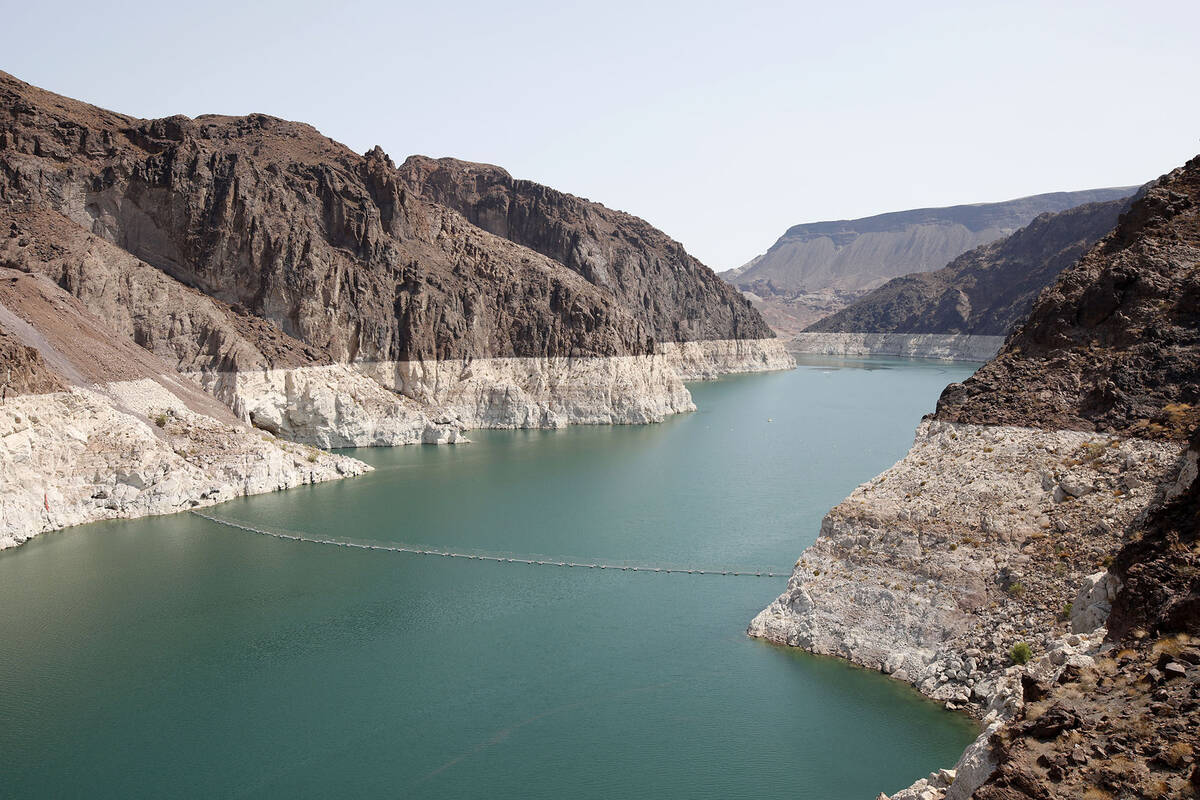
In a few weeks, the federal government will release updated Lake Mead projections. Those outlooks will be much worse than what came out last month. Since mid-April, federal water managers decided to hold more water behind Glen Canyon Dam to prevent the low-reservoir plumbing problems that emerge in drought years at Lake Powell. That needs to be calculated into the projections. Inevitably, it is bad news for Lake Mead. The bathtub ring will grow larger as the water levels shrink. Levels at Powell won’t crash.
The federal government’s unprecedented decision to keep an additional 1.5 million acre feet from flowing to Arizona, California and Nevada this summer appeases the Upper Basin because it keeps their savings accounts — i.e. water stored in reservoirs — fuller. But it comes at the expense of Lake Mead crashing. If the federal government would chose to send that 1.5 million acre feet down there would be a reverse impact at Powell that also comes with the baggage of the bad plumbing there.
The most compelling part of the Lower Basin’s plan is that it asks the federal government to begin outlining a plan for modifying/fixing the plumbing problems at Glen Canyon. The lower the elevation at Glen Canyon, the more difficulty the dam has to pass water downstream through Grand Canyon and into Lake Mead. To see the Lower Basin leaders raise the concerns of Glen Canyon Dam probably has David Brower spinning in his grave. Better late than never.
In a system that’s going bankrupt, there needs to be a liquidation of 20th Century shibboleths. We can do it the easy way or the hard way.
See our recommendations for commonsense Colorado River management.
See our report on Glen Canyon Dam’s plumbing problems.
See our recent media comments about the river in the New York Times and local outlets.
See the full proposal below:
