Hundreds of dollars.
That’s how much more customers of the Central Iron County Water District could pay per month for water in the coming years. And, go figure, public officials are not touting that bit of information when they gin up the need for their precious pipeline that will harm groundwater systems throughout Utah and Nevada.
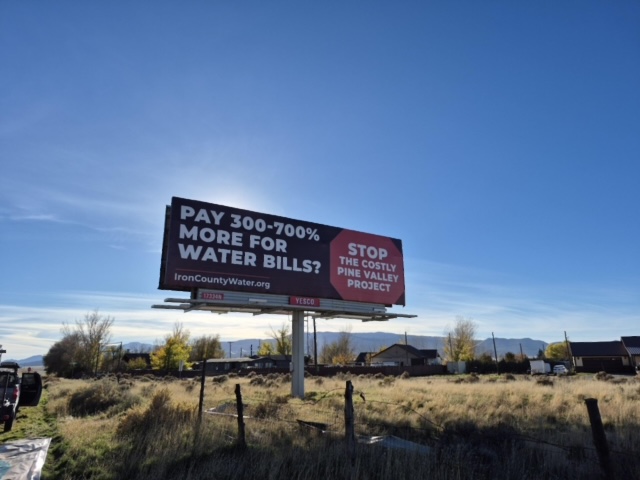
Last week, a billboard with a cost message went up near Cedar City to warn residents about the high costs coming their way for the unnecessary, dangerous, and expensive water grab. Our coalition invested in this public education effort to ensure that locals knew what their government wanted to inflict on them.
By November 24th, we expect federal officials to release the final environmental review documents for the Cedar City Pipeline and Water Grab. One of the big questions we have is this: What will the project cost?
Documents from the project proponent, the Central Iron County Water District, show that they estimate more than 400 percent water bill hikes in their service areas in the coming years for Phase 1 of the three-phase effort, known officially as the Pine Valley Water Supply Project. For some folks, that could mean hundreds of dollars more for water. Insane, right?
Don’t take our word for it. The documents are here.
These datapoints are not publicly passed around in any meaningful way. That’s why we wanted to educate folks in a public way.
Additionally, the cost estimates from the water officials were conducted before COVID-era inflation. In other words, we believe the predictions from the project proponent are inaccurate without inflation adjustments.
You can learn more about these cost impacts at www.ironcountywater.org — a site that highlights the local perspective about the unfathomable price hikes for the project.
And let’s remember, this money would be spent on a project that’s likely not to produce what’s estimated in the long run. For example, USGS data show that the water Iron County wants doesn’t exist in full underground. Water officials in Iron County are relying on outdated estimates of what’s available. What should we believe: data that are decades old or studies recently conducted by the USGS?
Iron County wants its ratepayers to gamble on the former. We will shine a light on the issue — and we will do it on more than a billboard along the I-15.
