Baker, NV — Today a coalition of county governments, farmers, ranchers, concerned citizens, and government watchdogs appealed the federal government’s approval of the Cedar City Pipeline. The appellants include Great Basin Water Network, Beaver County, Millard County, Juab County, White Pine County (NV), the City of Milford (UT), and individual residents of Utah and Nevada. The coalition also includes the Central Nevada Regional Water Authority and the N-4 State Grazing Board of Nevada. The Indian Peaks Band of the Paiute Tribe of Utah and the Center for Biological Diversity also filed separate appeals.
The challenges arise from the Bureau of Land Management’s March 2, 2026, Record of Decision that approved the groundwater mining project proposed by officials at the Central Iron County Water Conservancy District (CICWCD). The appeal to the Interior Board of Land Appeals (IBLA) includes a request for a stay of the BLM decision. IBLA has 45 days to grant or deny a stay and begin adjudicating the appeal.
Get a copy of our appeal below.
The appeal asserts the BLM’s decision violates federal law by allowing severe harms to private property, water rights, public resources, and the environment. Experts who have reviewed the BLM’s decision have highlighted faulty scientific assumptions about the regional impacts of large-scale groundwater pumping on aquifers in the Great Salt Lake Desert Groundwater Flow System, known by locals as the West Desert. The project impacts some of the most important groundwater dependent ecosystems and rural communities in the region near Great Basin National Park — threatening farming, ranching, tribal rights, ecosystems, and the long-term stability of desert aquifers.
The public review period for the BLM’s Final Environmental Impact Statement was dramatically shortened, disregarding standards for public participation and due process. The BLM provided just one weekend for the public to review an 800-plus page document. The rushed review period followed a nearly three-year pause that took effect in May 2023. The last time the public had meaningful engagement was in Winter 2022.
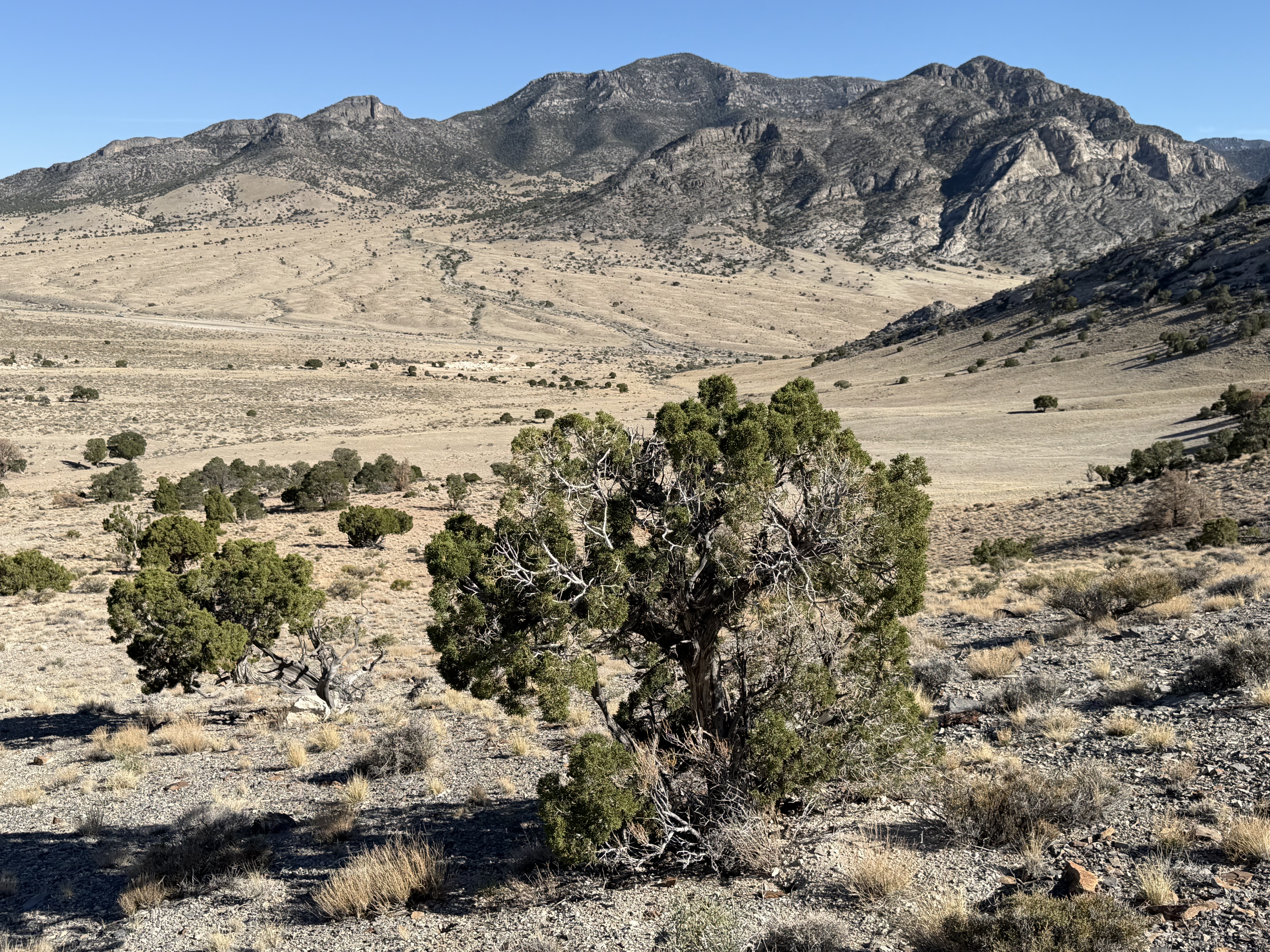
Known as the Pine Valley Water Supply Project (PVWSP), the effort to export groundwater is part of a much larger effort known as the West Desert Project, which also includes drilling wells and exporting water directly from Wah Wah and Hamlin Valleys. The BLM did not give proper review or any consideration to the whole West Desert Project. Beaver County has been leading the fight since Iron County first dreamed of the West Desert project in 2005. Beaver County continues to seek accountability.
“This project doesn’t just harm our residents, it robs future generations of the ability to farm, ranch, hunt, fish and recreate in the West Desert,” said Tammy Pearson, Beaver County Commissioner. “Beaver County’s appeal ensures we are defending the rights of our constituents and demanding accountability for desert water across the region.”
The Great Basin Water Network (GBWN) has been partnering with rural counties on the project since 2020 and will continue working with a diverse coalition representing a variety of interests to highlight the hydrologic, economic, and legal flaws with the project approval.
“Look at satellite imagery of Cedar City. The community is not running out of water like Iron County officials claim. They are over-pumping and over-using their own supplies,” said Kyle Roerink, executive director of the Great Basin Water Network. “We aren’t merely appealing a regulatory decision. We are appealing to common sense and reason. Powerful people want development at all costs and at breakneck speed in Cedar City. The pipeline, however, is their most expensive and risky choice for augmenting supply. Instead, Iron County officials need to start paying farmers fair market value in the Cedar Valley for their senior water rights before they pilfer from rural communities in the West Desert.”
The epicenter of the project is in Pine Valley. But the impacts of the project will span far beyond that basin. One of the main victims of the project is Mark Wintch of Wah Wah Ranch. Iron County’s own modeling shows that the project will harm his agricultural operation in Wah Wah Valley by siphoning his water to Cedar City.
“I will not sit idly by so Iron County can take my water for data centers, warehouses, sprawl and power plants in Cedar City,” said Mark Wintch, owner of Wah Wah Ranch. “This appeal is about defending my senior water rights and my livelihood. Once ranches like mine are gone, they never come back. The same can be said about our rights as citizens.”
The project proponents used biased modeling and questionable parameters to mask the significant adverse impacts. In their own work, however, they admit there will be hundreds of feet of aquifer drawdown in Pine Valley and major impacts to aquifers in Snake Valley, Wah Wah Valley, Tule Valley, Sevier Desert, and the Escalante Desert. Expert reports show that the economic impacts could be even more problematic and far-reaching than the BLM and Iron County officials suggested in the FEIS. The project also hearkens back to when the Southern Nevada Water Authority attempted to export water from the region for growth in Las Vegas. White Pine, Millard, and Juab Counties, along with GBWN, fought in courts for many years to ultimately stop that project. Again, those counties must now work to stop CICWCD from taking their waters.
“The White Pine County Board of Commissioners voted to participate in this appeal, recognizing the need to defend residents from an unnecessary and unsustainable project that will siphon water away from Snake Valley,” said Paula Carson, Chair of the White Pine County Commission. “We will continue to work with our partners to stop this uneconomic and infeasible project.”
FOR MORE INFORMATION:
- Watch our film
- See the 11 reasons why we are appealing
- Learn about the data center and power plant that are increasing water demand
- Learn about Iron County’s problematic water rate and demand structure
- Learn about the West Desert Pipeline
- Learn about impacts near Great Basin National Park
